

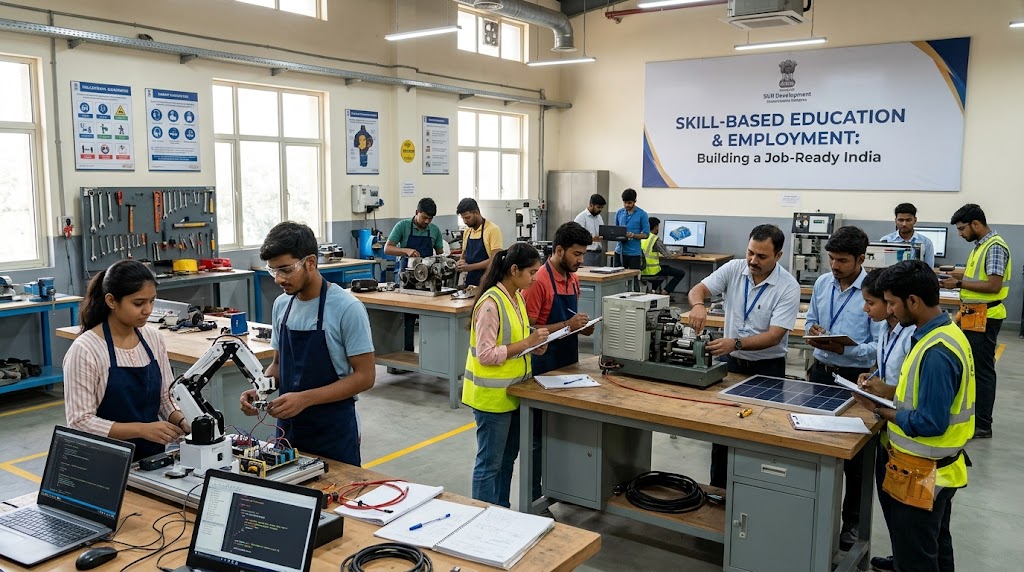
India’s employment landscape is changing as businesses adopt new technologies, expand digital services and seek workers with practical, job-ready abilities. While academic qualifications remain important, employers increasingly value candidates who can apply their knowledge, solve problems and adapt to real workplace situations.
This is bringing skill-based education into sharper focus. By combining classroom learning with practical training and industry exposure, India can help young people prepare for employment while giving businesses access to a more capable workforce. The challenge is to ensure that education leads not only to qualifications but also to meaningful career opportunities.
Why Skill-Based Education Matters
For many students, the transition from education to employment can be difficult. They may have theoretical knowledge but limited experience with the tools, processes and responsibilities required in a professional environment.
Skill-based learning can help bridge this gap through practical assignments, workshops, vocational courses and workplace training. It can also offer alternative career pathways for students who prefer hands-on learning over conventional academic routes.
Fields such as healthcare, manufacturing, construction, logistics, hospitality and digital services require different combinations of technical and practical abilities. Education that reflects these requirements can help learners make more informed career choices and improve their readiness for available jobs.
Technology Is Reshaping Employment
Artificial intelligence, automation and digital platforms are changing the way companies operate. As a result, demand is growing for workers who can use digital tools, understand data, manage technical systems and learn new processes.
However, the future workforce will need more than technical knowledge. Communication, teamwork, critical thinking and problem-solving remain important across industries. Employees must be able to work with others, respond to changing situations and make sound decisions.
This means skill-based education should combine technical training with communication and professional development. The objective is not simply to train students for today’s vacancies, but to prepare them for occupations that may continue to evolve.
Stronger Industry Links Can Improve Employability
Educational institutions cannot always predict changing workplace requirements on their own. Greater cooperation with employers can help ensure that training programmes reflect the skills businesses actually need.
Industry partnerships can support internships, apprenticeships, practical projects and workplace mentoring. These opportunities allow learners to understand professional expectations while gaining experience before entering full-time employment.
Businesses can also benefit from this approach. By participating in training and identifying potential recruits early, employers may find it easier to develop talent and reduce the gap between hiring and workplace readiness.
For such partnerships to deliver results, courses must be regularly updated and assessed against practical outcomes rather than enrolment numbers alone.
New Opportunities for Young People and Small Businesses
A stronger skill-development system can create opportunities beyond traditional office-based careers. Practical training can help young people enter technical occupations, skilled trades, service industries and emerging digital professions.
It can also support entrepreneurship. Skills in areas such as digital marketing, repair services, food processing, design and business management can help individuals start small enterprises or offer specialised services.
Small businesses may benefit from access to workers who can perform specific tasks with less additional training. Better workforce skills can improve service quality, productivity and the ability to expand operations.
However, training must be connected to real economic demand. Learners need clear information about career prospects, expected earnings and the qualifications required for different roles.
Making Training Accessible and Relevant
The growth of skill-based education depends on whether students can access quality training regardless of their location or financial circumstances. Inadequate facilities, limited access to modern equipment and shortages of qualified trainers can affect learning outcomes.
Affordability is another concern, particularly for students who must travel or give up paid work to attend courses. Flexible schedules, financial support and accessible digital learning can help more people participate, although practical occupations still require hands-on instruction.
Public perception also matters. Vocational education should be recognised as a valuable career pathway rather than treated as a second choice. Clear certification standards and evidence of employment outcomes can help build confidence among students, families and employers.
Lifelong Learning Will Become Essential
Skill development should continue beyond school, college or initial vocational training. As technology and business requirements change, workers may need to update their knowledge, learn new systems or move into different roles.
Short courses, professional certifications and employer-supported training can help people remain competitive throughout their careers. Businesses that invest in employee development can also strengthen productivity and retain valuable experience.
For workers, continuous learning offers a way to adapt to change rather than risk being left behind. For the wider economy, it can help create a workforce that responds more effectively to new industries and employment opportunities.
Conclusion
The future of employment in India will depend not only on the number of jobs created but also on how effectively people are prepared to fill them. Skill-based education can help connect learning with workplace requirements, improve practical abilities and open up more diverse career paths for young people.
Progress will require sustained cooperation between educational institutions, employers and policymakers. Training programmes must remain relevant, affordable and accessible, while employers should recognise practical competence alongside academic qualifications.
By placing greater emphasis on real-world learning and continuous skill development, India can strengthen its workforce, support business growth and help more people move from education into meaningful, sustainable employment.