

Cinema has always been a reflection of human imagination, technological progress, and artistic expression. From silent black-and-white films to modern digital productions, the film industry has continuously evolved with changing technologies. Today, Artificial Intelligence (AI) is emerging as one of the most influential forces shaping the future of filmmaking. From scriptwriting and visual effects to cinematography, editing, sound design, and animation, AI is transforming almost every stage of film production.
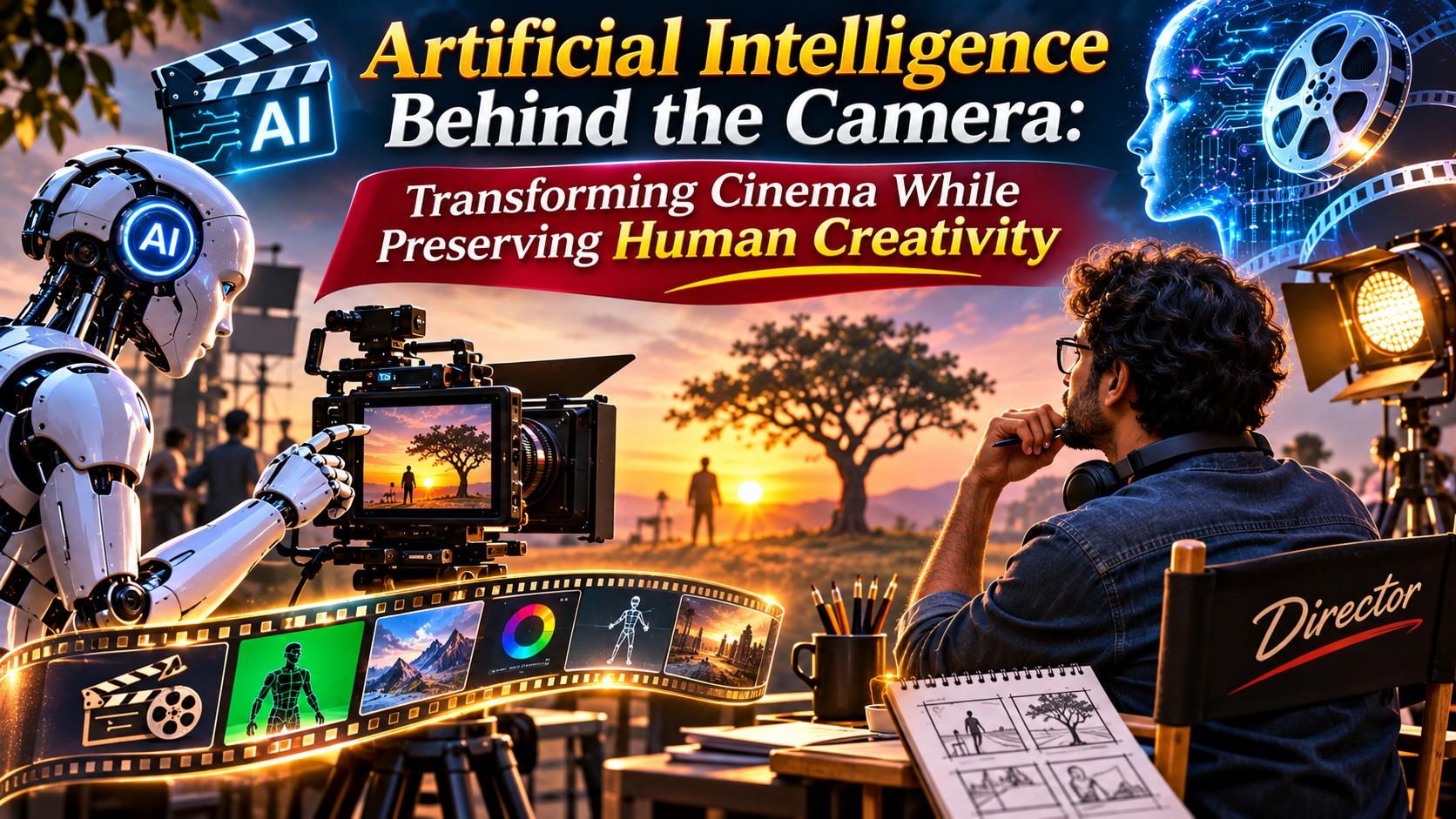
However, the growing influence of AI raises an important question: Can machines truly replace the creativity, emotions, and artistic vision of human filmmakers? The answer lies not in competition between humans and machines, but in understanding how technology can work alongside human imagination to create extraordinary cinematic experiences.
The Rise of Artificial Intelligence in Cinema
Artificial Intelligence refers to the ability of machines and computer systems to perform tasks that traditionally require human intelligence, such as learning, analysing information, recognising patterns, and generating content.
In cinema, AI is no longer limited to futuristic concepts or science-fiction stories. It has become a practical tool that assists filmmakers in making creative decisions, reducing production time, and improving visual quality.
AI-powered technologies are now being used to analyse scripts, generate visual concepts, create digital environments, enhance images, synchronise audio, and even assist in developing realistic computer-generated characters. These innovations are making filmmaking more efficient and opening new creative possibilities for filmmakers.
How AI Is Transforming the Filmmaking Process
AI in Scriptwriting and Story Development
The foundation of every great film is a compelling story. AI-powered writing tools can assist screenwriters in developing story ideas, creating character outlines, analysing dialogue, and identifying narrative patterns.
These tools can help writers overcome creative blocks and explore alternative storytelling possibilities. However, the emotional depth, cultural understanding, originality, and personal experiences that make a story meaningful still depend greatly on human writers.
AI can suggest possibilities, but the storyteller gives those possibilities a soul.
AI in Cinematography and Visual Effects
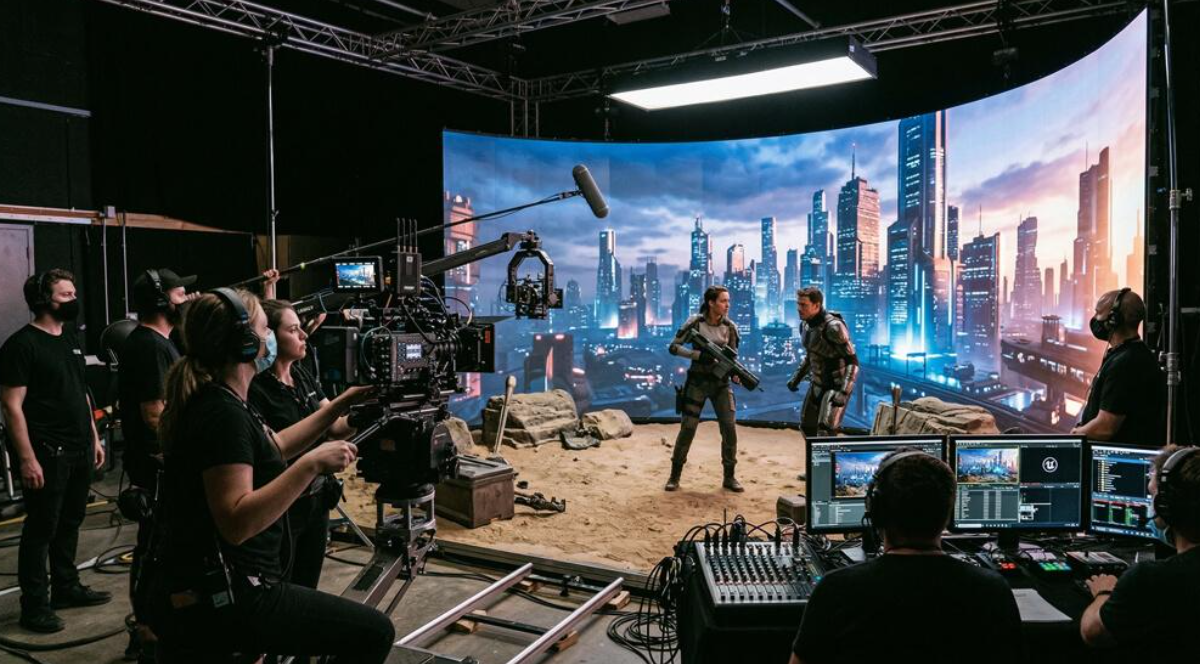
One of the most remarkable contributions of AI can be seen in cinematography and visual effects (VFX). AI-assisted technologies help filmmakers create realistic digital environments, enhance lighting, improve image quality, and generate complex visual effects.
Virtual production techniques allow filmmakers to combine real-world performances with digitally created backgrounds. AI can also assist in camera tracking, scene analysis, image enhancement, and the creation of digital environments.
These developments enable filmmakers to visualise scenes that might otherwise require enormous budgets, elaborate sets, or complicated shooting arrangements.
AI in Film Editing and Post-Production
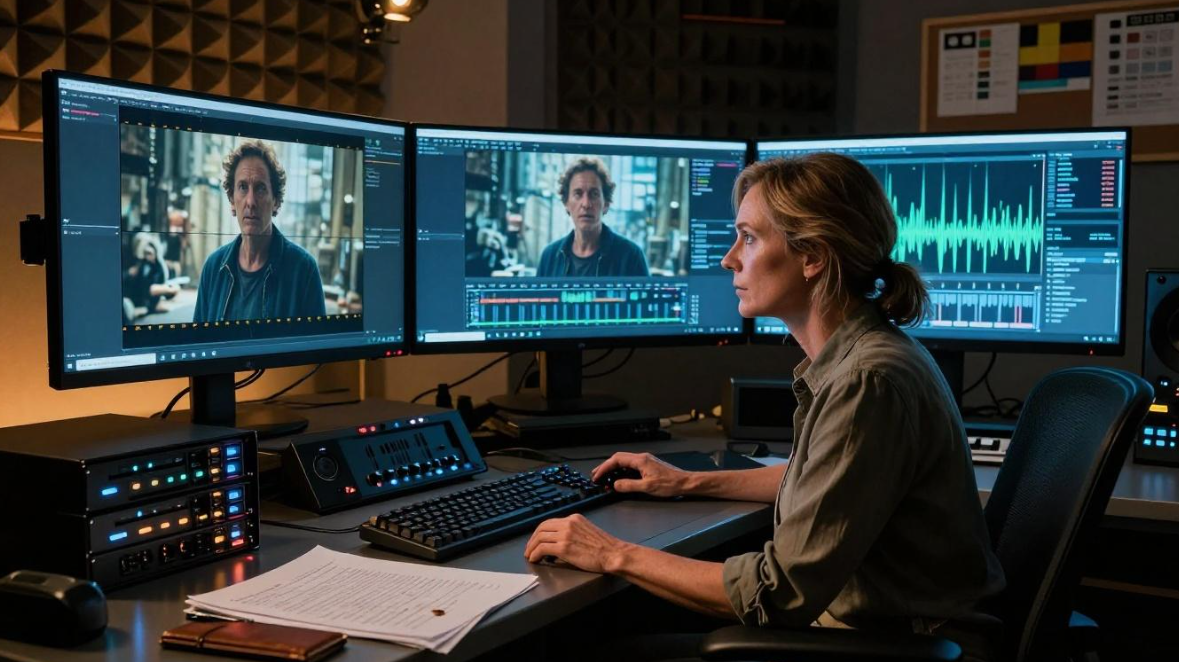
Film editing requires precision, creativity, and an understanding of storytelling rhythm. AI-powered editing software can automatically organise footage, identify important scenes, detect faces, synchronise audio, and suggest suitable transitions.
It can also help with colour correction, noise reduction, subtitles, and audio enhancement.
By automating repetitive technical tasks, AI allows editors to devote more time to the artistic aspects of filmmaking, such as pacing, emotional continuity, and storytelling.
AI in Animation and Digital Characters
AI is bringing significant changes to animation and digital character creation. Machine-learning technologies can assist with facial animation, motion capture, character modelling, and realistic movements.
These tools can reduce the time required to create complex animated sequences and help independent creators produce visually impressive content.
AI-generated characters and digital environments are also expanding the possibilities of storytelling, allowing filmmakers to explore imaginative worlds beyond the limitations of physical production.
AI in Sound Design and Music
Sound is an essential part of cinematic storytelling. Background music, dialogue, sound effects, and silence all contribute to the emotional experience of a film.
AI-powered audio tools can remove background noise, improve dialogue clarity, generate sound effects, and assist in music composition. They can also help filmmakers adapt soundtracks to different scenes and emotional situations.
Nevertheless, music and sound design are not merely technical elements. Their emotional impact depends on artistic judgement, cultural context, and creative interpretation.
AI as a Creative Partner, Not a Replacement
The most important aspect of AI in cinema is the relationship between technology and human creativity.
A machine can analyse thousands of films, recognise visual patterns, and generate impressive images. However, filmmaking involves much more than technical perfection. It requires empathy, imagination, cultural awareness, emotional intelligence, and the ability to communicate human experiences.
A director understands the emotions behind a scene. An actor brings life to a character through personal interpretation. A cinematographer uses lighting and camera movement to communicate feelings. A writer transforms personal experiences into meaningful stories.
AI can assist all these creative processes, but human vision gives cinema its emotional identity.
Therefore, the future of filmmaking should be viewed as a collaboration between human intelligence and artificial intelligence rather than a battle between the two.
Challenges and Ethical Concerns of AI in Cinema
Despite its advantages, the growing use of AI in filmmaking also creates several challenges.
-
Job displacement: Automation may affect certain technical and creative jobs in the film industry, particularly where repetitive tasks are involved.
-
Copyright and ownership: Questions arise regarding the ownership of AI-generated content and the use of copyrighted material in training AI systems.
-
Deepfakes and digital identity: AI can recreate human faces and voices, raising concerns about consent, privacy, and the misuse of actors’ identities.
-
Loss of originality: Excessive dependence on AI-generated content may encourage repetitive ideas and reduce opportunities for distinctive artistic expression.
-
Human authenticity: Audiences may increasingly question whether performances, voices, and emotional expressions are genuinely human.
Addressing these challenges requires ethical guidelines, transparent practices, appropriate consent, and stronger protection for artists and creative professionals.
The Future of Cinema: A Human-AI Collaboration
The future of cinema will likely be shaped by a combination of human imagination and intelligent technology. AI may make filmmaking more accessible to independent creators, reduce production costs, improve visual storytelling, and encourage experimentation with new cinematic techniques.
Small production houses may gain access to tools that were once available only to large studios. Filmmakers may create sophisticated visual experiences with fewer resources, while audiences may experience more immersive and personalised forms of entertainment.
However, technological advancement should not become the ultimate goal of filmmaking. The real purpose of cinema is to tell stories that inspire, entertain, challenge, and connect people.
The films that leave a lasting impression will not necessarily be those with the most advanced technology, but those that communicate powerful human emotions.
Conclusion
Artificial Intelligence is undoubtedly transforming the world of cinema. It is changing how films are written, produced, edited, and experienced. From intelligent visual effects to automated post-production, AI is providing filmmakers with powerful tools to explore new creative possibilities.
Yet, the true essence of cinema remains deeply human. Technology may create breathtaking visuals, generate digital characters, and simplify complex production processes, but the ability to understand human emotions, express meaningful ideas, and connect with audiences remains central to artistic storytelling.
Ultimately, AI should not be seen as a replacement for human creativity, but as an instrument that enhances it. The future of cinema does not belong to machines alone or humans alone—it belongs to the creative collaboration between both.