

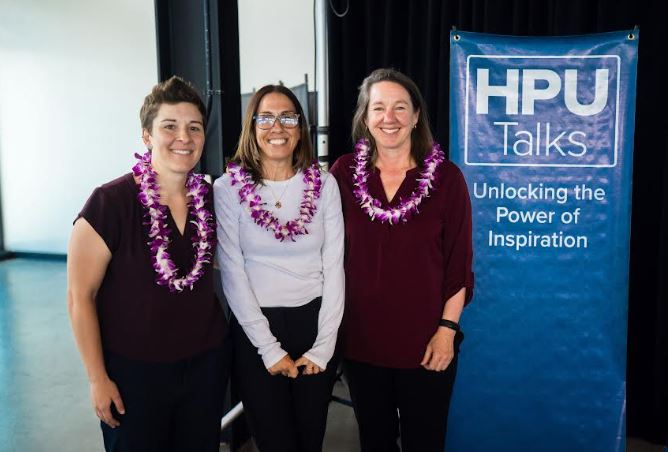
(HONOLULU) – Hawaiʻi Pacific University (HPU) hosted a research symposium and panel discussion on July 17 at its Aloha Tower Marketplace campus where scientists presented the findings of a two-year field and laboratory study, conducted with the University of Hawaiʻi at Mānoa (UH Mānoa), evaluating whether Genki balls improve water quality in Hawaiʻi’s waterways. These findings were presented alongside research conducted in the Ala Wai Canal, highlighting the system’s complexity and the difficulty of attributing changes in environmental conditions to individual bioremediation efforts.
Genki balls are fermented mud balls made from mud, rice bran and molasses, combined with a commercial product called Effective Microorganisms, or EM, which is marketed as containing lactic acid bacteria, phototrophic bacteria and yeast.
Tossed into waterways, the balls are intended to sink to the bottom, break down organic “sludge” and improve water quality. The best-known local effort, the Genki Ala Wai Project, has deployed hundreds of thousands of the balls into Honolulu’s Ala Wai Canal since 2019, supported by community volunteers and ongoing third-party monitoring. EM is produced by EMRO USA and distributed locally through partners including EM Hawaiʻi LLC.
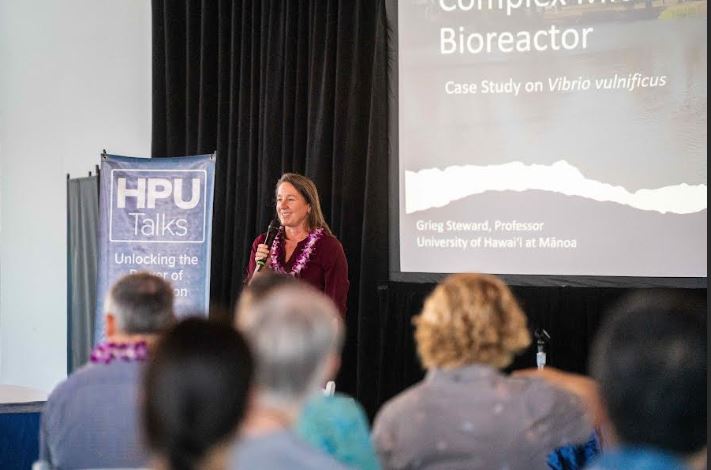
Titled HPU Talks: Evaluating Genki Balls for Hawaiʻi’s Waterways, the symposium brought together researchers, educators, resource managers and community partners for an afternoon of evidence-based discussion. Opening remarks were delivered by HPU College of Natural and Computational Sciences Dean Brenda Jensen, Ph.D., followed by a keynote address from Grieg Steward, Ph.D., Professor of Oceanography at UH Mānoa.