

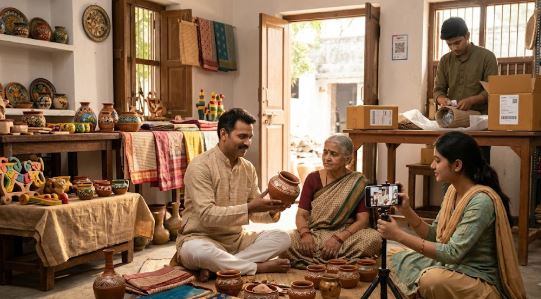
India’s handicraft industry has long been an important source of livelihoods, supporting artisans, family-run businesses and small enterprises across the country. From handwoven textiles and wooden artefacts to pottery, jewellery and decorative products, these crafts reflect the country’s rich cultural heritage. Today, digital marketplaces for handicraft businesses are creating new ways for traditional products to reach customers beyond local markets.
In the past, many artisans depended on exhibitions, local retailers and intermediaries to sell their work. Although these channels remain important, they can limit access to customers in other cities and states. Online marketplaces are helping bridge this gap by giving small businesses a platform to showcase their products to a much wider audience without the cost of opening physical stores in multiple locations.
This shift is creating opportunities for artisans to turn traditional skills into more sustainable sources of income.
Online Platforms Expand Market Access
For small handicraft businesses, finding new customers has often been as challenging as producing quality goods. Digital marketplaces can make that process easier by bringing sellers and buyers together in one place.
Artisans can display product photographs, explain how items are made and communicate directly with potential customers. Buyers, meanwhile, can explore handmade products from different regions without having to travel to craft centres or exhibitions.
Greater visibility can help businesses identify new demand, test different product designs and reach customers who value handmade, locally produced and culturally distinctive goods. For enterprises that previously relied on a small customer base, this wider reach can support gradual business growth.
Authenticity Becomes a Business Advantage
As consumers become more interested in the story behind the products they purchase, handmade goods have an opportunity to stand apart from mass-produced alternatives.
Artisans can use digital platforms to explain the origin of a craft, the materials involved and the time required to create each piece. Such details help customers understand the value of handmade products rather than comparing them only on price.
Geographical indications, where applicable, can also help distinguish products associated with particular regions and traditional skills. However, sellers need to describe these credentials accurately and use authorised labels only when eligible.
For handicraft businesses, authenticity is more than a marketing message. It can help build customer trust, strengthen product identity and encourage repeat purchases.
Social Media Helps Small Brands Find Buyers
Social media has become a useful discovery channel for businesses that may not have the budget for large advertising campaigns. Short videos, product demonstrations and photographs of the making process can introduce traditional crafts to younger audiences and customers in distant markets.
Artisans can also use customer feedback and engagement to understand which designs, colours and product categories attract the most interest. This information can guide production decisions and reduce the risk of investing in items that may not sell.
A strong online presence does not necessarily require expensive campaigns. Consistent product presentation, clear descriptions, timely responses and reliable service can help small businesses build credibility over time.
Better Pricing and Customer Relationships
Selling online can provide artisans with greater insight into customer preferences and market prices. Direct engagement may also reduce dependence on multiple intermediaries, although marketplace commissions, packaging, delivery, returns and promotional expenses must be considered before setting prices.
A sustainable online business needs to account for the full cost of production, including materials, labour and the time spent making each item. Pricing too low can increase sales without generating enough profit to support the artisan or the business.
Clear product information, accurate delivery estimates and responsive customer service are equally important. These practices help manage expectations and create the confidence needed for customers to return.
Logistics and Digital Skills Remain Key Challenges
Online selling can open new markets, but reaching customers is only one part of the process. Many small producers still face challenges involving digital payments, packaging, shipping costs, product photography and the handling of returns.
Fragile, bulky or customised products can be particularly difficult to deliver profitably. Businesses need packaging that protects the item while keeping costs manageable. They must also ensure that product descriptions and photographs accurately reflect what customers receive.
Training in digital marketing, pricing, inventory management and online customer service can help artisans operate more confidently. Access to shared packaging facilities, reliable logistics partners and support from cooperatives or local business organisations can make online expansion more practical.
A Wider Opportunity for Local Economies
The growth of digital handicraft businesses can benefit more than individual sellers. Higher demand for handmade products can create work for raw-material suppliers, packagers, transport providers, designers and other small service businesses.
It can also help keep traditional skills commercially relevant, particularly when younger generations see a viable income opportunity in craft-based work. For women-led enterprises and businesses operating in smaller towns and rural areas, digital channels can offer an additional route to market, provided they have access to the necessary skills and infrastructure.
The benefits, however, depend on whether increased sales translate into fair earnings. Sustainable growth requires transparent pricing, consistent quality and business practices that recognise the labour and expertise involved in handmade production.
Building Sustainable Handicraft Businesses
Digital marketplaces are changing how India’s handicraft businesses find customers and compete in a wider market. Their greatest value lies not simply in moving products online, but in helping artisans build recognisable brands, understand customer demand and develop more dependable sales channels.
For small businesses, the most effective approach is to combine the reach of digital platforms with the qualities that make handmade products distinctive: craftsmanship, authenticity and personal attention. With better digital skills, sensible pricing and dependable delivery, traditional craft businesses can expand their customer base while protecting the value of their work.
India’s handicraft sector does not need to abandon its traditions to grow. By using digital tools thoughtfully, artisans can preserve their skills while creating stronger commercial opportunities for the future.