

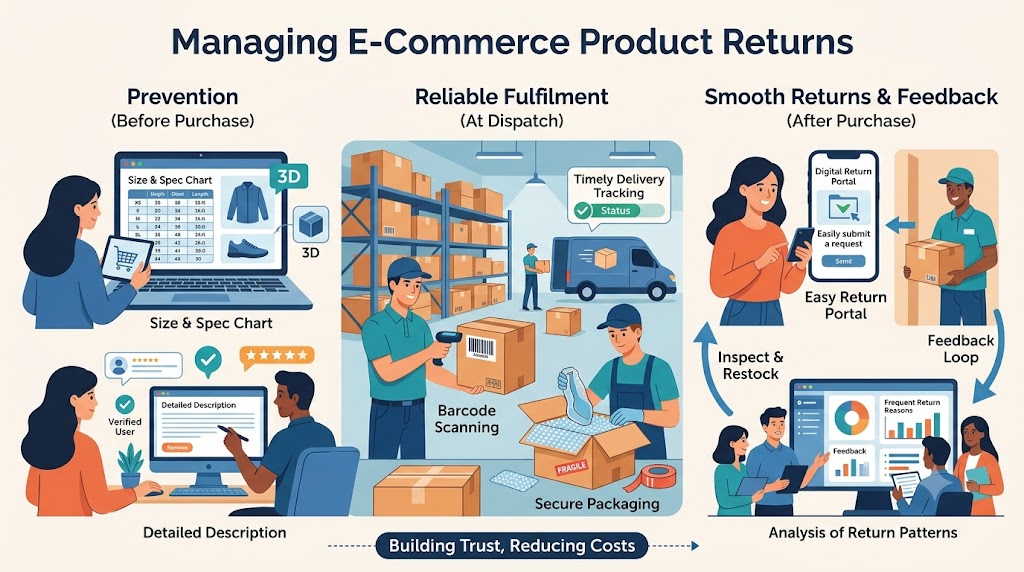
Product returns are an unavoidable part of online shopping, but frequent returns can create significant challenges for e-commerce businesses. From additional shipping and handling expenses to inventory delays and customer complaints, each return can put pressure on daily operations. For smaller online retailers, these costs can be particularly difficult to manage.
The solution is not to make returns harder for customers. Instead, businesses need to understand why products are being returned and address the problems that arise before, during and after a purchase. Clear product information, accurate order fulfilment and responsive customer service can help retailers prevent avoidable returns while making online shopping more reliable.
Clear Product Information Helps Customers Make Better Choices
One of the biggest challenges in online shopping is that customers cannot physically examine a product before buying it. When photographs, descriptions or measurements fail to reflect the actual item, disappointment can follow once the order arrives.
Retailers can reduce this gap by providing clear product images, detailed specifications and honest descriptions. Fashion brands can offer accurate size charts, fit guidance and fabric information, while electronics and homeware sellers can highlight dimensions, compatibility and essential features.
Customer reviews also help shoppers understand how products perform in everyday use. Verified feedback and photographs from previous buyers can offer useful context beyond carefully prepared product images.
When customers know what to expect, they are better equipped to choose products that suit their needs, reducing the likelihood of unnecessary returns and building confidence in the brand.
Accurate Order Fulfilment Makes Online Shopping More Reliable
Receiving the wrong size, colour or product can quickly turn a positive shopping experience into a frustrating one. Damaged goods, missing items and inaccurate stock information can create similar problems, often requiring additional deliveries and customer support.
E-commerce businesses can improve accuracy through organised warehouse operations, reliable inventory records and careful checks before dispatch. Barcode scanning and warehouse management software can help growing retailers verify products and reduce picking and packing errors.
Packaging is equally important. Suitable protective materials can minimise damage during transit, particularly for fragile products and electronic equipment. Retailers should also provide realistic delivery estimates and timely tracking updates so customers know when to expect their orders.
Reliable fulfilment helps businesses avoid preventable mistakes while giving customers greater confidence in their purchases.
A Simple Return Process Can Strengthen Customer Trust
Even when retailers provide accurate descriptions and deliver orders correctly, some products will still need to be returned. A customer may discover a defect, find that an item does not meet their needs or change their mind.
In these situations, a clear and straightforward return policy can make all the difference. Customers should be able to understand the return window, eligibility conditions, applicable charges and refund timelines before completing a purchase.
Digital return portals can simplify the process by allowing customers to submit requests and check progress without repeatedly contacting customer support. Regular updates about collection, inspection and refunds can further reduce uncertainty.
A fair returns experience shows customers that a business is willing to resolve problems rather than leave them to navigate a complicated process alone.
Exchanges and Refunds Should Put Customers First
Not every return needs to end in a lost sale. A customer who receives the wrong size or decides that another colour would be more suitable may prefer an exchange over a refund.
Retailers can make these options easier by displaying available alternatives and processing replacements promptly. Store credit may also appeal to customers who intend to shop with the business again, provided the terms are clear and the choice is voluntary.
However, these alternatives should never become a way to obstruct legitimate refunds. Customers are more likely to maintain trust in a brand when they feel their concerns are being addressed fairly.
The aim is to find a practical solution that works for both the customer and the retailer, without adding unnecessary friction to the shopping experience.
Customer Feedback Can Help Prevent Repeat Problems
Every return offers an opportunity to understand what went wrong. Repeated complaints about sizing may point to inaccurate measurements, while frequent reports of damaged products could indicate weaknesses in packaging or delivery handling.
Businesses can record return reasons and regularly review patterns across products, suppliers and delivery partners. This helps them distinguish isolated incidents from recurring problems that require attention.
Feedback from customer service teams can be equally valuable. Questions about product features, compatibility or delivery expectations may reveal where online listings need to be clearer.
Acting on these insights allows retailers to make practical improvements, reduce repeated mistakes and provide a more consistent shopping experience.
Smarter Return Management Can Help Protect Profitability
Returns affect more than customer satisfaction. Reverse shipping, product inspection, repackaging and restocking require additional time and resources. Some returned goods may also lose value, particularly when they are seasonal, perishable or no longer suitable for resale.
For small and medium-sized online sellers, repeated returns can put pressure on margins and tie up money in stock that cannot immediately be sold again. Improving product accuracy and fulfilment is therefore an important part of managing costs as the business grows.
Retailers can begin with simple measures, such as monitoring return reasons, checking frequently returned products and reviewing packaging quality. As order volumes increase, digital tools can help track return requests, identify recurring issues and improve inventory visibility.
The focus should remain on preventing avoidable returns rather than discouraging customers from seeking a fair resolution.
Conclusion
For e-commerce brands, reducing returns starts long before a parcel reaches the customer. Accurate product descriptions, reliable fulfilment, suitable packaging and clear communication all help create a smoother shopping experience.
When a return is necessary, a transparent process and timely response can preserve the relationship. When problems occur repeatedly, customer feedback can help businesses identify the cause and make lasting improvements.
Ultimately, successful online retail depends on more than attracting customers and completing sales. It requires delivering on promises, resolving problems fairly and giving people a reason to shop with confidence again.