

New Delhi, Sep 09: In a first, Page Executive India, Part of Michael Page India has launched a special, Executive Compensation & Talent Trends Report. The broadsheet highlights India’s senior leadership landscape becoming increasingly dynamic, with executives seeking faster career progression, broader responsibilities and greater opportunities for impact, even as organisations face growing pressure to keep pace. The report finds that 94% of senior leaders are open to new opportunities, while 41% do not expect to remain in their current role for more than a year.
Based on insights from over 1,200 C-level executives and senior leaders in India, the findings reflect that the challenge is no longer access to talent, but the ability of organisations to keep pace with ambition, mobility, and rising expectations around career growth, reward, and capability development.
Senior leadership capability is under pressure to keep pace with growth
While India’s executive workforce is highly ambitious, organizations are racing to keep up.
As expectations rise, companies face greater pressure to strengthen leadership development and structured career pathways.
This highlights a structural challenge: the issue is not defining strategy, but ensuring senior leadership capability, depth, and readiness to deliver on that strategy at speed.
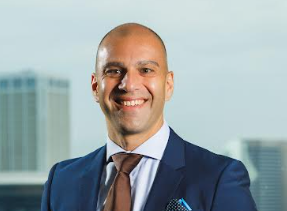
According to Jon Goldstein, Managing Partner Page Executive India:
“India’s executive market is not constrained by a lack of talent, but by the pace at which organisations can develop and retain it. Senior leaders today are looking for faster progression, greater impact, and clearer alignment between performance and reward. Organisations that can match that ambition with structured development, transparent frameworks and strong senior leadership capability will have a clear competitive advantage.”
AI adoption is widespread, but competitive advantage depends on execution
Artificial intelligence is now embedded across senior leadership roles in India:
75% of executives are actively using AI in their role
75% of executives report improved productivity
72% of executives state improved quality of work
However, the real differentiator is shifting. Organisations are moving beyond adoption to focus on how senior leadership embeds AI into operating models, decision-making, and team performance. Those that succeed will treat AI not as a tool, but as a core senior leadership capability.
Nilay Khandelwal, Senior Managing Director, Michael Page India and Singapore added,
“From an executive perspective, the conversation around AI is moving from adoption to accountability. Leaders are increasingly seeing the impact AI can have on productivity and quality of work, but that also raises a more fundamental question: do organisations have the right capabilities in place to capture that value? As roles evolve and new skills become important, the ability to identify, develop and retain the talent that can work effectively alongside AI will become an increasingly important leadership priority.”
From compensation to career acceleration: what really drives retention
Compensation remains important:
65% of executives are satisfied with their remuneration
87% cite pay as a key driver of job satisfaction
However, mobility remains extremely high, and compensation alone is no longer enough to retain senior leadership. Senior executives are increasingly prioritising:
Career progression and promotion opportunities
Access to high-profile, high-impact projects
Faster development and broader exposure
This signals a clear shift from pay-led attraction to growth-led retention.
Transparency is expected; alignment is the new differentiator
Compensation structures are viewed as transparent by 72% of senior leaders in India. However, differentiation is no longer about transparency alone, but about clarity and alignment.
As variable compensation becomes a defining feature of executive reward, organisations must clearly link performance, outcomes, and long-term value to pay frameworks to build trust and engagement within senior leadership teams.
Skills-based hiring is advancing, but execution remains inconsistent
Organisations across India are increasingly embracing skills-based hiring, recognising its role in improving access to talent and reducing bias.
However, a gap remains between intent and execution:
Only a minority prioritise skills over traditional career background
Many organisations still rely on academic and professional pedigree
This suggests that companies risk narrowing their talent pool unless they clearly define and assess the capabilities required for future success.
India’s executive market is characterised by continuous movement, fast decision cycles, and increasing expectations from senior leadership. Executives are building careers that are more dynamic, progression-driven, and opportunity-led than ever before. Organisations that can offer clear career pathways, accelerated development, and meaningful senior leadership opportunities will be best positioned to attract and retain top talent.
Page Executive is a global leader in executive search and senior leadership recruitment. With a presence across international markets, we specialise in permanent and interim placements, board and non-executive appointments, and senior leadership advisory services. We combine global reach with deep local expertise to help organisations secure and develop the senior leadership talent needed to succeed in a changing world. The full Executive Compensation & Talent Trends 2026 report provides in-depth insights into executive compensation, talent dynamics and recruitment trend.