

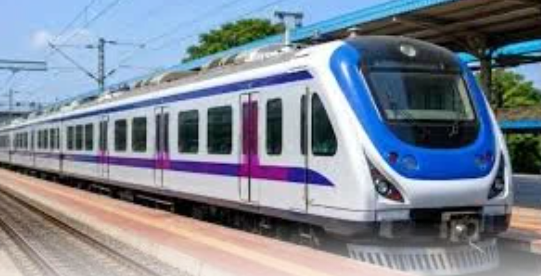
Indian Railways is stepping up efforts to expand rail capacity in Maharashtra and Telangana with two infrastructure projects aimed at improving passenger connectivity, supporting freight movement and strengthening links with important industrial and mining centres.
The Railway Ministry has approved the doubling of the 10.86-km Chouk-Karjat railway section of Central Railway at an estimated cost of Rs 497 crore. The project includes capacity augmentation works such as doubling, tripling, quadrupling, flyovers and bypasses to improve train operations along the corridor.
The Chouk-Karjat section forms part of the Panvel-Chouk-Karjat route, an important corridor carrying both passenger and freight traffic. Once the project is completed, the upgraded section is expected to support five additional passenger trains in each direction every day.
The enhanced capacity is also expected to facilitate an additional 18.35 million tonnes per annum (MTPA) of freight traffic, while helping reduce the detention of goods trains. This can improve the movement of industrial commodities and make freight operations more efficient.
New Rail Link to Connect Industrial and Mining Centres
Indian Railways has also approved a 38.21-km new railway line between Mukutban in Adilabad and Gadchandur, covering important industrial areas in the region, at an estimated cost of Rs 493 crore.
Mukutban in Yavatmal district and Gadchandur in Chandrapur district are surrounded by industrial and mining activity, including cement plants, coal mines operated by Western Coalfields Ltd and nearby limestone mines.
The new line is expected to provide these industries with stronger rail connectivity and a more efficient route for transporting raw materials and finished products.
The project is estimated to support around 6.08 MTPA of freight traffic and enable two MEMU trains in each direction per day after commissioning.
Shorter Routes to Help Reduce Logistics Costs
The new railway connection is expected to provide a shorter route for freight movement, reducing travel distance and transportation time. It will also offer an alternative route to the existing Wardha-Manikgarh section, helping ease congestion and improve the movement of goods.
The line will provide direct connectivity between the coal and cement-producing clusters and the Majri-Nanded route. This can support faster movement of commodities such as coal, cement and other industrial materials towards destinations including Jalna, Parbhani, Chhatrapati Sambhajinagar and parts of Maharashtra and Karnataka.
Rail Infrastructure to Support Regional Economic Growth
The two projects highlight the wider role of railway infrastructure in supporting both passenger mobility and economic activity. Better rail capacity can provide passengers with additional travel options while creating more efficient transportation channels for industries.
For freight-dependent sectors such as coal, cement, steel and mining, reliable rail connectivity can help streamline supply chains and improve access to markets. Indian Railways has also reported continued growth in freight movement, with freight loading rising 5.4 per cent year-on-year in August 2026, reflecting sustained demand from key industries.
The expansion of rail infrastructure in Maharashtra and Telangana is therefore expected to strengthen regional connectivity while supporting industrial clusters, logistics networks and local economic activity.
By adding new routes and increasing capacity on existing corridors, Indian Railways is working to create greater space for both passenger and freight services, helping the railway network respond to growing transportation needs across the country.