
Aule Space, a deep-tech startup pioneering autonomous satellites that can dock with and service other satellites in orbit, has raised $2 million in pre-seed funding led by pi Ventures, with participation from a clutch of angel investors including Eash Sundaram, former Board Member of Intelsat and Founder of Utpata Ventures, and Arvind Lakshmikumar, CEO of defence tech company Tonbo Imaging, among others. Aule Space has been part of the Entrepreneurs First accelerator program and is also backed by the Transpose Platform.
With this funding, Aule Space will expand its engineering team, build ground infrastructure for docking tests, and advance development of its first demonstration satellites, set to launch next year. These satellites will validate Rendezvous, Proximity Operations and Docking (RPOD) – the capability for spacecraft to safely approach, maneuver near, and physically attach to other objects in orbit.
Aule’s innovation centres on developing a satellite-agnostic docking mechanism combined with advanced AI-driven Guidance, Navigation, and Control (GNC) algorithms, enabling them to make one of the world’s lightest and most cost efficient fleets of RPOD enabled satellites The technology has commercial and use cases such as life extension of high-value geostationary (GEO) communication satellites and debris removal and defence applications such as inspection of satellites for space domain awareness.
Today, satellites are routinely abandoned once they run out of fuel, despite remaining largely functional. The GEO communication satellites require fuel to stay fixed over a region on Earth and provide reliable communication links, as natural disturbances constantly push the satellite away from its intended spot. In the geostationary orbit alone, commercial communication satellites worth over $100 billion are expected to stop generating revenue due to fuel depletion, as there is currently no routine in-space servicing infrastructure.
Aule Space aims to address this gap by deploying its autonomous jetpack satellite, which can dock with existing GEO satellites, remain attached, and maintain the orbital position of the host satellite, extending operational life by up to six years.
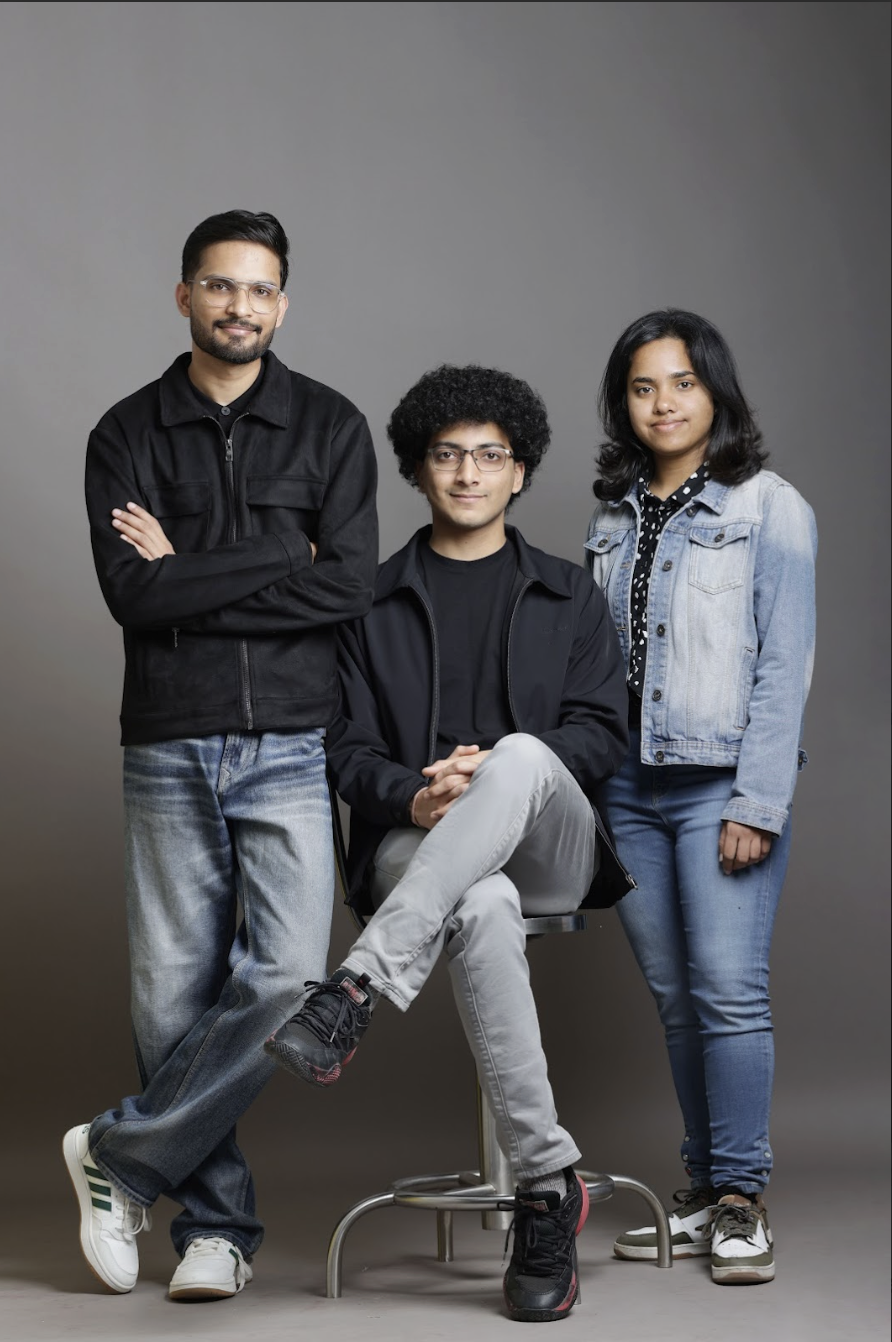
Founded in 2024 by Jay Panchal (Co-founder & CEO), an early engineer at Pixxel; Nithyaa Giri (Co-founder & CTO), a founding engineer at Trify EV; and Hrishit Tambi (Co-founder & COO), who previously worked alongside scientists from the European Space Agency at LibreCube, Aule Space brings together deep experience across satellite engineering, autonomous systems, and machine learning capabilities critical for executing complex close-proximity operations in orbit.
A key differentiator for Aule is its focus on non-cooperative docking, which allows its jetpacks to attach to legacy satellites that were not designed for servicing. Aule is the first company in India building a satellite life-extension solution for existing GEO satellites, and only a handful of private companies globally have demonstrated comparable capabilities.
“Imagine buying an expensive car and abandoning it when the fuel runs out. This is how satellites worth over $100 billion are operated today, we want to change that,” said Jay, Co-founder and CEO of Aule Space. “With launch costs coming down drastically, new forms of value generation will be unlocked in space. Large space assets that enable this will require routine assembly and service in space, for which our RPOD capabilities will be the key building block.”
“Aule Space is reimagining how satellites operate in orbit through its foundational RPOD technology, enabling safer, more cost-efficient, and sustainable access to space. What stood out to us was the rare combination of deep technical excellence and a clearly thought-through commercial roadmap,” said Manish Singhal, Founding Partner at pi Ventures. “We believe Aule is building critical infrastructure that will underpin the next phase of the space economy across satellite servicing, orbital sustainability, and space security.”
The company plans to launch demonstration RPOD satellites next year to validate its docking technology and lay the groundwork for commercial deployment. In the long run, Aule Space aims to operate the robotic workforce for the in-space economy.