

Healthcare is one of the most important sectors of human life, and technology is transforming the way medical services are delivered. In the modern world, traditional healthcare systems are gradually evolving into smart healthcare systems through the integration of Artificial Intelligence (AI), Machine Learning (ML), the Internet of Things (IoT), robotics, telemedicine, and wearable devices.
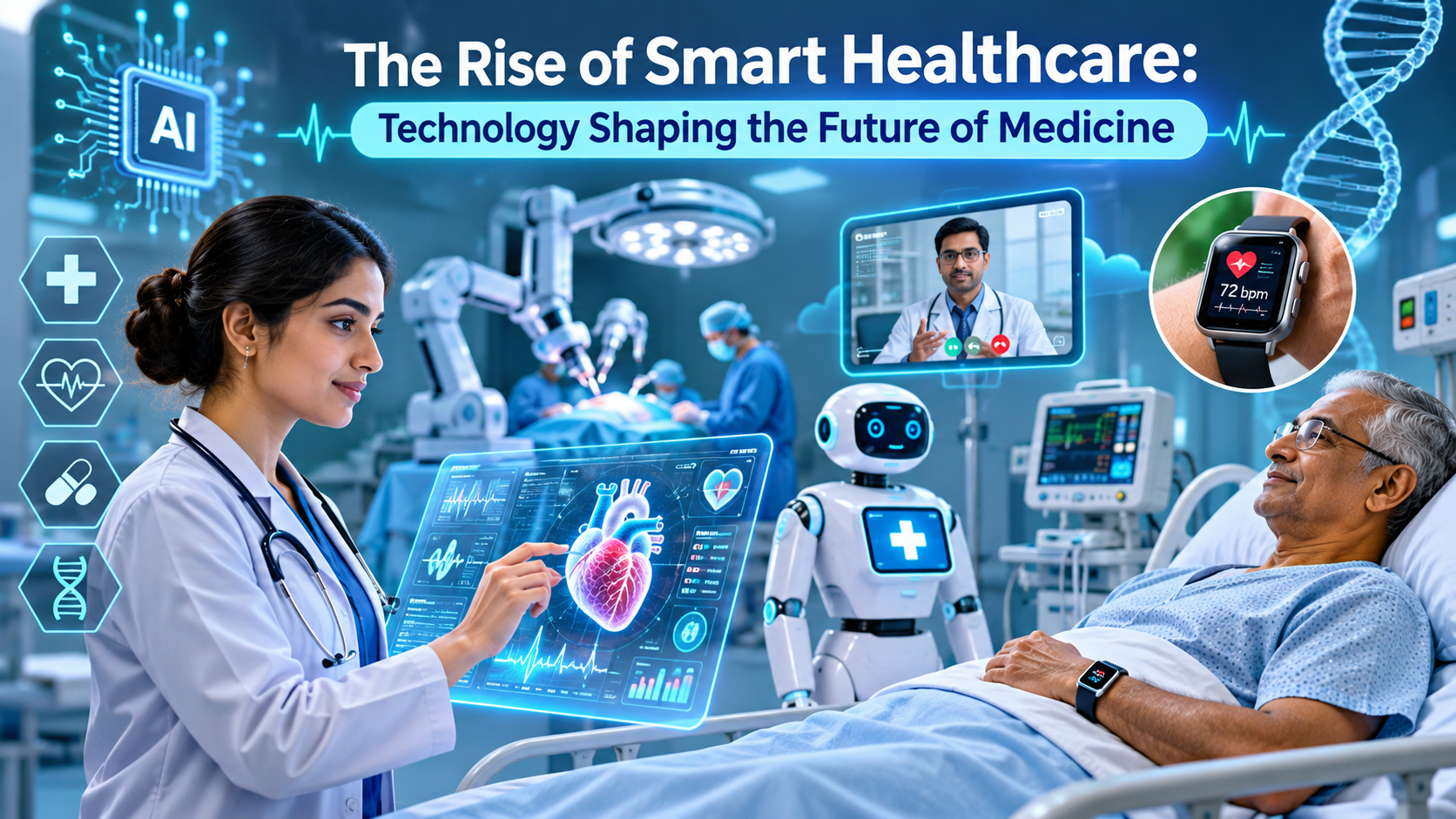
Smart healthcare refers to the use of advanced digital technologies to improve the quality, accessibility, accuracy, and efficiency of medical services. It is changing the way doctors diagnose diseases, monitor patients, provide treatments, and manage medical records. The primary goal of smart healthcare is to make medical services faster, safer, more affordable, and more patient-centred.
Artificial Intelligence in Healthcare
Artificial Intelligence is one of the most powerful technologies shaping the future of medicine. AI helps doctors analyse medical reports, detect diseases, and make better clinical decisions.
AI-powered systems can examine X-rays, MRI scans, CT scans, and other medical images to identify possible signs of diseases. They can also assist in detecting conditions such as cancer, heart disease, and neurological disorders.
Furthermore, AI-powered virtual assistants and chatbots can provide basic health information, help patients schedule appointments, and support healthcare professionals in managing their workloads.
Internet of Things (IoT) in Smart Healthcare
The Internet of Things (IoT) connects medical devices and healthcare systems through the internet. Smartwatches, fitness trackers, digital blood pressure monitors, and smart glucose monitors are some examples of IoT-based healthcare devices.
These devices collect important health information, such as heart rate, blood pressure, oxygen levels, and blood glucose levels. Doctors can use this information to monitor patients remotely and identify potential health problems at an early stage.
IoT technology is especially useful for elderly people and patients suffering from chronic diseases because it supports continuous health monitoring without requiring frequent hospital visits.
Telemedicine and Remote Healthcare
Telemedicine has made healthcare services more accessible by allowing patients to consult doctors through smartphones, computers, and other digital devices.
People living in rural and remote areas can now connect with qualified healthcare professionals without travelling long distances. Video consultations, online prescriptions, digital medical reports, and remote follow-ups have made healthcare more convenient.
In countries like India, telemedicine has significant potential to reduce the gap between urban and rural healthcare services.
Robotics in Modern Medicine
Robotics is playing an increasingly important role in modern medical treatment. Robotic-assisted surgery allows surgeons to perform certain complex procedures with enhanced precision and control.
Medical robots are also used in rehabilitation, patient assistance, hospital logistics, and medicine delivery.
For example, rehabilitation robots can help patients recover movement after injuries or strokes. In hospitals, robotic systems can assist healthcare workers with repetitive tasks, allowing them to focus more on patient care.
However, robots work under appropriate clinical supervision, and they are designed to support rather than completely replace medical professionals.
Wearable Technology and Patient Monitoring
Wearable technology is making healthcare more personalised and preventive. Smartwatches, fitness bands, and other wearable devices can track physical activities, sleep patterns, heart rate, and other health indicators.
These devices encourage people to become more aware of their health and lifestyle. They can also help identify unusual changes that may require medical attention.
In the future, advanced wearable technologies may play an even greater role in continuous patient monitoring and personalised healthcare.
Electronic Health Records (EHR)
Electronic Health Records have replaced many traditional paper-based medical record systems. They allow hospitals and healthcare professionals to store, access, and manage patient information digitally.
Medical histories, laboratory reports, prescriptions, allergies, and treatment records can be organised in electronic systems.
When implemented securely and with proper access controls, EHR systems can improve communication between healthcare professionals, reduce paperwork, minimise errors, and support better medical decisions.
Benefits of Smart Healthcare
Smart healthcare offers several important advantages:
-
Early Disease Detection: Advanced technologies can help identify potential health problems at an early stage.
-
Improved Accuracy: AI-assisted tools can support doctors in analysing medical information.
-
Better Accessibility: Telemedicine connects patients with doctors, even in remote areas.
-
Time Efficiency: Digital systems reduce paperwork and simplify hospital management.
-
Personalised Treatment: Medical professionals can use patient data to develop more suitable treatment plans.
-
Continuous Monitoring: Wearable devices and remote monitoring systems help track health conditions.
-
Reduced Healthcare Costs: Efficient digital services may reduce unnecessary hospital visits and administrative expenses.
Challenges and Risks of Smart Healthcare
Despite its numerous advantages, smart healthcare also faces several challenges.
Data Privacy and Security: Healthcare systems store sensitive personal information. Cyberattacks and data breaches can put patient privacy at risk.
High Implementation Costs: Advanced medical equipment, software, and digital infrastructure can be expensive.
Digital Divide: People in rural areas or economically weaker communities may lack internet access, smartphones, or the digital skills needed to use these services.
Technology Dependence: Excessive dependence on automated systems may create problems if technology fails or provides inaccurate information.
Ethical Concerns: AI-based medical decisions raise questions about accountability, transparency, fairness, and patient consent.
Therefore, strong cybersecurity, proper regulations, medical supervision, and equal access to technology are essential for the successful development of smart healthcare.
The Future of Smart Healthcare
The future of healthcare will be increasingly connected, intelligent, and personalised. Emerging technologies such as advanced AI, 5G connectivity, digital twins, precision medicine, and next-generation robotics have the potential to transform medical services further.
In the coming years, doctors may be able to predict certain health risks more effectively by analysing large amounts of medical and lifestyle data. Personalised treatment plans may become more common, while remote monitoring could help patients manage chronic conditions from their homes.
Smart hospitals may also integrate automated systems, intelligent patient monitoring, digital records, and robotic assistance to improve the overall healthcare experience.
However, technological progress must always be guided by medical evidence, patient safety, ethical responsibility, and human compassion.
Conclusion
The rise of smart healthcare represents a major transformation in the medical world. Technologies such as Artificial Intelligence, IoT, telemedicine, robotics, and wearable devices are making healthcare more accessible, efficient, and personalised.
Although challenges such as data security, affordability, and digital inequality remain, responsible implementation can help overcome many of these barriers.
Technology cannot replace the knowledge, experience, and compassion of doctors and healthcare professionals. Instead, it should work alongside them to provide better medical services and improve human lives.