

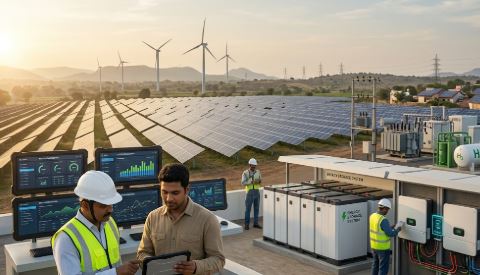
India’s renewable energy transition is creating a new wave of business opportunities for technology companies, software developers, equipment manufacturers and engineering firms. As the country expands its solar, wind, hydropower and green hydrogen capacity, the focus is gradually moving beyond electricity generation towards building a smarter, more efficient and digitally connected energy ecosystem.
India’s ambition to achieve 500 GW of non-fossil fuel-based energy capacity by 2030 is accelerating investment across the clean energy value chain. However, expanding renewable energy capacity involves more than installing solar panels and wind turbines. It requires advanced systems to manage electricity generation, balance supply and demand, improve storage, monitor equipment performance and maintain grid stability.
This changing landscape is creating opportunities for businesses specialising in artificial intelligence (AI), Internet of Things (IoT), automation, battery technology, data analytics and energy management software. For technology companies, the renewable energy sector is emerging as an important market where digital innovation can address practical industry challenges while creating new sources of commercial growth.
India’s Renewable Energy Transition Is Creating Demand for Technology
The rapid expansion of renewable energy is changing how electricity is generated, distributed and consumed in India. Unlike conventional power plants, solar and wind installations depend on weather conditions, making their output variable throughout the day.
As renewable energy accounts for a larger share of the electricity mix, power companies need better forecasting, monitoring and scheduling systems to ensure a reliable supply. At the same time, the growing adoption of rooftop solar and decentralised energy generation is increasing the number of installations that need to be monitored and managed.
Government initiatives, investments in domestic manufacturing and rising corporate demand for clean electricity are further supporting this transformation.
For technology businesses, these developments create opportunities to develop solutions that improve operational efficiency, reduce maintenance expenses and make renewable energy projects more commercially viable.
1. Artificial Intelligence and Data Analytics Can Improve Energy Management
Artificial intelligence is becoming increasingly relevant to renewable energy operations, particularly in forecasting electricity generation and improving asset performance.
Solar and wind generation can change depending on weather conditions, temperature and seasonal patterns. AI-powered platforms can analyse historical generation data, weather forecasts and real-time operating information to help energy companies estimate future electricity production more accurately.
This allows power producers to plan generation schedules, manage energy storage and respond more effectively to fluctuations in demand.
Technology companies can develop specialised software for:
-
Predictive energy forecasting: Estimating solar and wind generation using weather and historical performance data.
-
Asset performance monitoring: Identifying underperforming solar panels, turbines and other equipment.
-
Demand forecasting: Analysing electricity consumption patterns to improve supply planning.
-
Automated energy scheduling: Helping operators coordinate generation, storage and electricity distribution.
-
Operational analytics: Identifying inefficiencies and reducing avoidable maintenance expenses.
For software developers and AI startups, these applications offer opportunities to build subscription-based platforms and customised enterprise solutions for renewable energy producers, utilities and industrial consumers.
2. IoT and Smart Monitoring Are Expanding the Digital Energy Market
The growing number of renewable energy installations is creating demand for connected devices and remote monitoring systems.
Large solar parks and wind farms often cover extensive geographical areas, making manual inspection and maintenance expensive. Rooftop solar installations create another challenge because thousands of individual systems may be distributed across residential, commercial and industrial locations.
IoT technology can help address these operational difficulties by connecting sensors, smart meters and monitoring devices to centralised management platforms.
These systems can provide real-time information about electricity generation, equipment performance, temperature, voltage and other operating conditions.
For technology companies, the opportunities extend across both hardware and software. Businesses can manufacture smart sensors, monitoring devices and communication equipment while also developing platforms that collect and analyse operational data.
The expansion of rooftop solar under the PM Surya Ghar: Muft Bijli Yojana is particularly relevant. As more households adopt solar installations, demand can increase for digital monitoring, remote diagnostics, installation management and customer support solutions.
Companies offering integrated monitoring systems can serve solar installers, equipment distributors, housing societies and commercial property owners.
3. Battery Storage Technology Creates Opportunities for Innovation
Energy storage is becoming an important part of India’s renewable energy ecosystem. Solar and wind installations do not always generate electricity when demand is highest. Battery Energy Storage Systems (BESS) can help store surplus electricity and release it when required.
As investment in energy storage increases, technology companies have opportunities to develop battery management systems, monitoring software and advanced power electronics.
Battery Management Systems (BMS) are particularly important because they monitor battery temperature, voltage, charging cycles and overall performance. These systems help improve battery safety, extend operating life and optimise energy utilisation.
Businesses can explore opportunities in:
-
Battery monitoring and management software.
-
Thermal management and safety systems.
-
Smart charging and discharging technologies.
-
Energy storage optimisation platforms.
-
Battery performance analytics and diagnostics.
-
Integration of storage systems with solar and wind installations.
Manufacturers of battery components, control systems and power conversion equipment can also benefit from the increasing demand for reliable storage infrastructure.
For startups, developing software that helps commercial and industrial customers manage their battery storage more efficiently could become a promising business opportunity.
4. Smart Inverters and Power Electronics Support Domestic Manufacturing
The growth of renewable energy is increasing demand for advanced electrical equipment that can efficiently convert, control and distribute electricity.
Solar inverters, power conversion systems, transformers, control panels and grid-interconnection equipment are essential to renewable energy installations.
Smart inverters are becoming particularly important because they can provide more advanced monitoring and grid-support functions than conventional systems. They help manage electricity conversion while supporting voltage regulation and grid integration.
This creates opportunities for Indian manufacturers to expand their capabilities in power electronics and develop products for domestic as well as international markets.
The government’s emphasis on domestic manufacturing through initiatives such as Make in India and production-linked incentive programmes is also encouraging investment in the solar and related manufacturing ecosystem.
Technology businesses can explore opportunities in automated production equipment, quality inspection systems, semiconductor components, inverter software and power management solutions.
For smaller manufacturers, supplying specialised components to established renewable energy equipment producers could provide an entry point into this growing industrial market.
5. Digital Twin Technology Can Transform Renewable Energy Maintenance
Renewable energy projects involve substantial investment in physical assets, making equipment reliability and operational efficiency important to their financial performance.
Digital twin technology offers a way to monitor these assets through virtual representations that reflect their actual operating conditions.
For example, a digital twin of a wind turbine can use sensor data to track performance, identify unusual operating patterns and help engineers assess potential maintenance requirements. Similar systems can be developed for solar installations, battery storage facilities and other energy infrastructure.
This can help companies move from reactive maintenance towards more predictive approaches, reducing equipment downtime and unnecessary servicing costs.
Technology providers can develop digital twin platforms, asset simulation tools and performance analytics systems for renewable energy developers and industrial operators.
As renewable energy projects become larger and more technologically complex, these solutions could become increasingly valuable for businesses seeking to protect their investments and improve long-term returns.
6. Green Hydrogen Opens New Opportunities for Deep-Tech Companies
India’s National Green Hydrogen Mission is creating another emerging market for technology and engineering businesses.
Green hydrogen is produced using renewable electricity to power electrolysers that split water into hydrogen and oxygen. It has potential applications in industries such as steel, fertilisers, refining, chemicals and heavy transport.
However, developing a commercially viable green hydrogen ecosystem requires advanced equipment, reliable energy management and sophisticated monitoring systems.
This creates opportunities for companies developing:
-
Automated control systems for electrolysers.
-
Advanced sensors and hydrogen safety equipment.
-
Hydrogen production monitoring software.
-
Energy optimisation and process automation.
-
Storage and transportation monitoring systems.
-
Industrial water treatment and purification technologies.
For deep-tech startups and engineering companies, green hydrogen offers an opportunity to develop specialised solutions for an emerging industrial market.
Businesses that can improve electrolyser efficiency, reduce operating expenses and strengthen safety systems may find opportunities to collaborate with hydrogen producers and industrial customers.
7. Carbon Tracking and ESG Software Create a Growing Corporate Market
The renewable energy transition is also changing how companies measure and manage their environmental performance.
Businesses across manufacturing, infrastructure, transportation and other industries are facing increasing expectations to monitor energy consumption, track emissions and improve sustainability reporting.
This is creating demand for digital platforms that help organisations collect environmental data, calculate carbon emissions, monitor renewable energy consumption and prepare sustainability disclosures.
Technology companies can develop enterprise software that integrates electricity bills, energy management systems, operational data and emissions information into a single platform.
These solutions can help businesses identify energy inefficiencies, evaluate renewable energy procurement options and track progress towards sustainability targets.
The growing importance of sustainability reporting, including SEBI’s Business Responsibility and Sustainability Reporting framework for applicable listed entities, provides an additional commercial opportunity for specialised software providers.
For SaaS companies, carbon accounting and energy management platforms offer the possibility of building recurring revenue through annual subscriptions, enterprise licensing and customised reporting services.
8. Opportunities for Startups and Small Businesses in the Renewable Energy Supply Chain
India’s renewable energy expansion is not limited to large power producers and equipment manufacturers. A broader network of smaller businesses can participate by supplying specialised technology, products and services.
Some promising business opportunities include:
-
Solar monitoring solutions: Developing software for tracking rooftop and commercial solar installations.
-
Energy management systems: Helping factories, offices and commercial buildings optimise electricity consumption.
-
Smart meter technology: Manufacturing connected monitoring devices and providing data management services.
-
Battery maintenance: Offering battery diagnostics, performance monitoring and servicing solutions.
-
Automation services: Providing industrial control systems and automated inspection solutions.
-
Renewable energy software: Building platforms for asset management, generation forecasting and operational analytics.
-
Power electronics manufacturing: Producing specialised electrical components, inverters and control equipment.
-
Cybersecurity services: Protecting renewable energy infrastructure and connected operational technology systems.
Small businesses can enter the market by focusing on specific operational challenges rather than competing directly with established energy developers.
Partnerships with solar installers, equipment manufacturers, engineering contractors and renewable energy companies can help startups access customers and build industry credibility.
Challenges Technology Businesses Need to Address
Despite the growing opportunities, entering India’s renewable energy technology market requires careful planning.
High initial investment: Developing advanced hardware, manufacturing facilities and specialised software can involve considerable investment, particularly for early-stage businesses.
Technical reliability: Energy infrastructure requires dependable equipment and consistent performance. Technology providers must meet industry standards and demonstrate the long-term reliability of their solutions.
Integration challenges: Renewable energy installations often use equipment and software from different manufacturers. Ensuring compatibility between systems can be a significant challenge.
Skilled workforce: The sector needs professionals with expertise in power electronics, software engineering, battery technology, automation and energy management.
Commercial viability: Businesses must demonstrate that their solutions deliver measurable benefits, such as lower maintenance costs, improved energy efficiency or reduced operational downtime.
Companies that combine technical innovation with practical industry knowledge will be better positioned to establish sustainable business models.
Conclusion
India’s renewable energy growth is opening a new chapter for the country’s technology and industrial sectors. As solar, wind, battery storage and green hydrogen projects expand, the demand for intelligent systems that can manage, monitor and optimise energy infrastructure will become increasingly important.
For technology businesses, the opportunity lies in addressing the operational challenges that accompany this transition. AI-powered forecasting, IoT-based monitoring, advanced battery management, smart inverters and carbon tracking platforms are no longer just emerging technologies; they are becoming important tools for improving the efficiency and commercial viability of renewable energy projects.
The market also offers opportunities beyond large technology companies. Startups, software developers, equipment manufacturers and small engineering businesses can participate by building specialised solutions and establishing partnerships across the renewable energy supply chain.
Ultimately, India’s clean energy ambitions will depend not only on how quickly new generation capacity is installed but also on how efficiently the entire ecosystem operates. Businesses that can bridge the gap between energy infrastructure and digital innovation will be well positioned to benefit from this transformation and contribute to India’s evolving energy economy.