

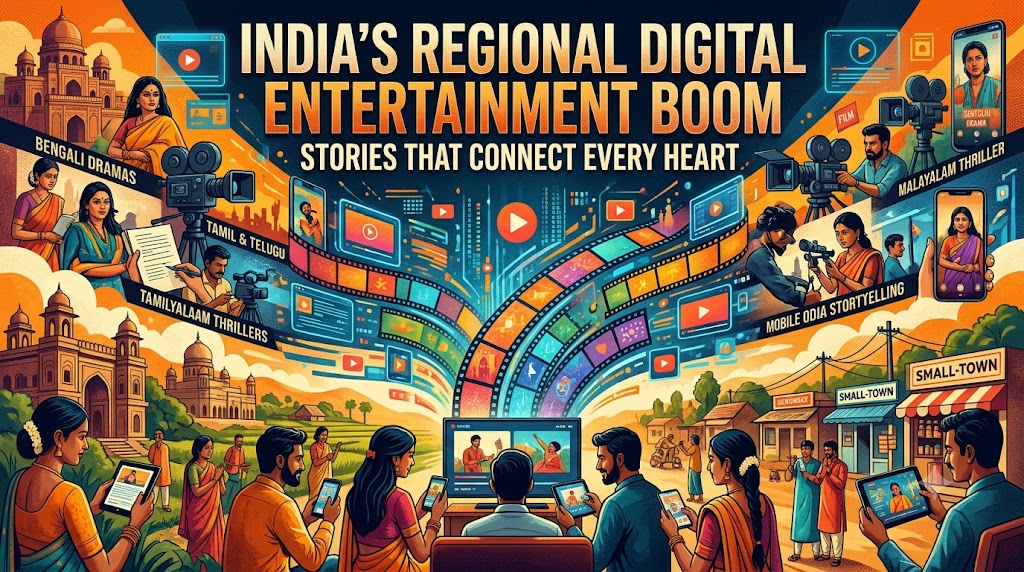
India’s digital entertainment market is entering a new phase of growth as audiences increasingly turn to content in their preferred languages. From Tamil and Telugu films to Malayalam thrillers, Bengali dramas and Odia storytelling, regional-language entertainment is gaining greater visibility across streaming platforms and digital video channels.
For the entertainment industry, this shift represents a significant business opportunity. Streaming services are expanding their content libraries, production houses are exploring stories rooted in local cultures, and advertisers are finding new ways to connect with consumers beyond major metropolitan cities. At the same time, the growing demand for regional content is creating opportunities for writers, actors, technicians, independent filmmakers and small production businesses.
The change reflects a broader transformation in consumer behaviour: viewers want entertainment that is accessible, relatable and connected to their language and everyday experiences.
Regional Stories Are Becoming a Business Priority
India’s entertainment industry has long been supported by strong regional film industries. However, digital distribution has made it easier for regional productions to reach audiences outside their traditional markets.
Earlier, a film’s commercial prospects often depended heavily on cinema releases, television rights and its popularity within a particular region. Streaming platforms have widened those possibilities by allowing viewers to discover films and series from different parts of the country without geographical restrictions.
For digital platforms, regional programming can help attract new subscribers and encourage existing customers to remain engaged. A distinctive collection of local-language films and original series can also help a platform stand out in a competitive market.
This has encouraged entertainment businesses to look beyond a single, nationally focused content strategy. Investing in different languages allows companies to serve a wider range of viewers while exploring stories that reflect India’s cultural diversity.
The commercial opportunity, however, depends on understanding each market. Language, storytelling preferences, production costs and audience behaviour vary across regions, making local knowledge essential to successful content investment.
Digital Access Is Expanding the Audience Base
The growing use of smartphones, affordable internet services and online video platforms has brought digital entertainment closer to consumers in smaller cities and towns. For many viewers, regional-language content offers a familiar entry point into the digital entertainment ecosystem.
People can now watch local films, discover emerging actors and follow stories that reflect their communities without depending entirely on traditional television schedules or nearby cinema halls. Subtitles and dubbing further expand the potential audience for selected productions.
This wider reach is important for businesses seeking growth beyond established urban markets. Regional content can help platforms attract viewers with different cultural interests, while local advertisers can use digital channels to reach customers in their preferred languages.
For the industry, a larger and more diverse audience creates opportunities to develop new formats, test different subscription models and build stronger relationships with viewers.
New Opportunities for Regional Filmmakers and Small Businesses
The expansion of regional digital entertainment is creating demand across the content production chain. Films, web series and digital programmes require writers, directors, actors, cinematographers, editors, sound engineers, designers and production crews.
Independent production houses may benefit from opportunities to develop content for streaming services, digital broadcasters and online audiences. Smaller studios can also provide specialised services such as subtitling, dubbing, translation, animation and post-production.
The economic impact can extend beyond the entertainment industry itself. Filming activity may generate business for local hotels, transport operators, caterers, equipment suppliers and other vendors. When productions take place outside established entertainment centres, they can bring additional spending into local economies.
Regional storytelling can also help emerging talent gain visibility. While access to funding and distribution remains competitive, digital platforms provide another route for creators to present their work and potentially reach audiences beyond their home states.
Short-Form Videos Are Driving Content Discovery
Short-form videos have become an important way for audiences to discover regional creators, music, comedy and entertainment. Clips from films, behind-the-scenes footage, promotional videos and original digital performances can introduce viewers to content they might not otherwise encounter.
For production companies, these formats offer a flexible promotional channel. A studio can build awareness of an upcoming release through cast interviews, short scenes and creator collaborations before directing interested viewers towards the full production.
Regional creators also offer advertisers access to audiences built around shared languages, interests and cultural experiences. This can be especially useful for local brands that want to reach customers without investing in expensive national campaigns.
However, strong engagement on short-form platforms does not necessarily guarantee paid subscriptions or profitable releases. Businesses need to connect audience interest with effective distribution, relevant marketing and commercially realistic content strategies.
Advertisers Are Finding Value in Local Languages
Regional-language entertainment is changing the way brands approach digital advertising. Messages delivered in a familiar language can make products easier to understand and help companies communicate in ways that reflect local preferences.
This creates opportunities for businesses in consumer goods, retail, education, food, travel, financial services and mobile technology. A company entering a new regional market can collaborate with local creators, sponsor relevant programmes or develop advertising campaigns that reflect the audience’s cultural context.
Smaller businesses can benefit as well. A local tourism operator, food producer or clothing retailer may use regional digital content to showcase its offerings and reach potential customers across a wider geographical area.
Successful campaigns require more than direct translation. Brands must understand local buying behaviour and cultural sensitivities while ensuring that their advertising remains accurate and transparent.
For digital platforms, regional audiences can also make advertising inventory more valuable when advertisers can reach clearly defined consumer groups. The opportunity depends on audience scale, engagement quality and the platform’s ability to demonstrate meaningful campaign results.
Subscription Models and Content Investment Are Evolving
As regional content becomes more important, streaming businesses must decide how to balance production spending with revenue opportunities. Subscription fees, advertising, licensing agreements and content partnerships can all contribute to a platform’s business model.
Exclusive regional films and series may help attract new subscribers, while advertising-supported services can reach consumers who prefer free or lower-cost entertainment. Some platforms use a combination of these models to serve different customer segments.
Yet producing more content does not automatically lead to higher profits. Production budgets, marketing expenses, licensing rights and competition for viewers all affect commercial performance. Platforms must evaluate which projects are likely to attract audiences and justify their investment.
A better understanding of regional preferences can help businesses make more informed decisions. Rather than treating all language markets alike, companies need to identify the formats, themes and release strategies that work for each audience.
Challenges the Industry Must Overcome
Despite its growth potential, regional digital entertainment faces several obstacles. Smaller production houses may struggle to secure financing, attract experienced professionals or negotiate favourable distribution arrangements. Content can also struggle to gain visibility when competing against large releases and established franchises.
Discoverability remains particularly important. A strong film or series may fail to reach its intended audience without effective promotion and platform recommendations. At the same time, repeatedly relying on familiar storylines can limit creative development and make content less distinctive.
Businesses must also consider affordability. Subscription fatigue can encourage viewers to limit the number of services they pay for, making it harder for platforms to recover the cost of content production. Advertising-supported models may help broaden access, but they need to balance revenue generation with a good viewing experience.
Long-term progress will require sustainable budgets, fair compensation for creative professionals, stronger distribution opportunities and investment in original storytelling.
Regional Content Can Strengthen India’s Creative Economy
The expansion of regional-language entertainment has implications beyond streaming subscriptions and advertising revenue. It can support employment, encourage entrepreneurship and create demand for specialised creative services across different parts of the country.
Regional productions can give local talent more opportunities to work, help independent studios develop commercial relationships and bring additional business to filming locations. Digital distribution can also help stories rooted in regional cultures find audiences across India and internationally.
For advertisers, the growth of local-language content offers new ways to reach consumers. For streaming services, it creates an opportunity to build differentiated content libraries. For small businesses, it opens additional routes to visibility and collaboration.
The long-term economic value will depend on whether the industry can turn audience demand into sustainable production, reliable income and profitable business models.
Conclusion
Regional-language content is becoming an important driver of change in India’s digital entertainment market. By making local stories more accessible, streaming platforms are expanding audience choice while creating new opportunities for filmmakers, advertisers, independent creators and service providers.
The next stage of growth will depend on quality storytelling, careful investment and a better understanding of regional audiences. Businesses that recognise the diversity of India’s entertainment market can build stronger connections with consumers while supporting a wider network of creative professionals and local enterprises.
As digital entertainment continues to expand, regional content is moving beyond a supporting role. It is becoming a strategic part of how India’s entertainment businesses attract viewers, develop new revenue streams and participate in the country’s growing digital economy.