

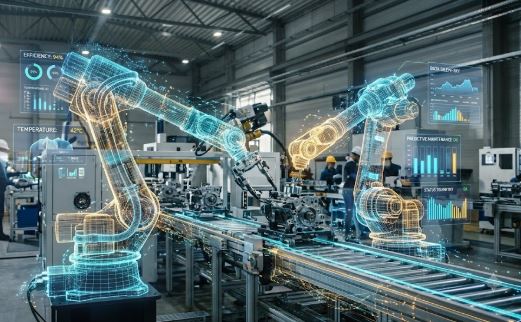
Pic Credit: Pexel
Digital twins in manufacturing are helping businesses improve productivity, control costs and make better decisions by bringing real-world operations into a virtual environment. As manufacturers face rising production expenses, tighter delivery schedules and growing pressure to maintain product quality, understanding what happens on the factory floor has become increasingly important. Digital twin technology allows businesses to create virtual representations of machines, production lines and entire facilities, using operational data to understand performance and test potential improvements. Rather than relying entirely on physical trials or reacting to problems after they occur, manufacturers can use these digital models to identify inefficiencies, plan maintenance and explore ways to improve production.
Understanding Digital Twin Technology
A digital twin is a virtual representation of a physical asset, system or process. In manufacturing, it can represent a single machine, an assembly line or a complete production facility.
The technology can combine information from sensors, machinery and business software to show how equipment and processes perform under different conditions. More advanced digital twins can also simulate changes and help businesses understand their possible impact before implementing them in the real world.
For example, a manufacturer planning to increase production can use a digital twin to examine whether existing machines can handle the additional workload. The model may help identify capacity limitations, potential delays and changes needed to maintain quality.
This gives managers a clearer basis for decision-making and reduces the need to depend solely on costly physical trials.
How Digital Twins Are Changing Manufacturing Operations
Reducing Downtime and Maintenance Costs
Equipment breakdowns can interrupt production, delay orders and increase repair expenses. Digital twins can help manufacturers monitor machine performance and identify unusual patterns that may indicate developing problems.
By analysing operational data, maintenance teams can investigate potential faults earlier and plan repairs more effectively. This can reduce dependence on emergency maintenance and help businesses make better use of their equipment.
For manufacturers working with tight production schedules, even a reduction in unexpected downtime can improve operational efficiency. However, the benefits depend on the accuracy of the data and the effectiveness of the maintenance process.
Making Production More Efficient
A factory’s output depends on how well its machines, workers and production processes work together. A delay at one stage can affect several others, creating bottlenecks and increasing operating costs.
Digital twins allow manufacturers to examine production flows, test alternative schedules and assess how changes may affect output. Managers can explore different scenarios before changing the actual production line.
This is particularly useful when demand fluctuates or businesses introduce new products. Better planning can help manufacturers use available resources more efficiently, improve delivery timelines and avoid unnecessary investment in additional capacity.
Improving Product Quality and Reducing Waste
Maintaining consistent quality is a major concern for manufacturers. Defective products and wasted materials increase costs and can damage relationships with customers.
Digital twins can help businesses examine the relationship between production conditions and product performance. By comparing operating data across different stages of manufacturing, teams can identify patterns associated with defects and investigate possible causes.
Manufacturers can then test adjustments to production settings and evaluate their likely effects before making changes. When combined with established quality-control practices, this approach can help improve consistency, reduce waste and support more efficient use of raw materials.
Helping Businesses Manage Energy Costs
Energy is a significant expense for many manufacturing operations. Inefficient machinery, poorly planned production schedules and unnecessary equipment use can increase electricity consumption.
Digital twins can help businesses understand how operating conditions influence energy demand. Manufacturers can use these insights to evaluate more efficient production schedules, identify underperforming equipment and explore opportunities to reduce consumption.
Lower energy use can improve cost management while supporting sustainability goals. For businesses operating on narrow margins, these savings can contribute to stronger overall performance.
Creating Opportunities for Small and Medium Manufacturers
Digital twin technology is not limited to large industrial companies with substantial technology budgets. Smaller manufacturers can also explore its benefits by focusing on a specific machine or production process.
For example, a business experiencing frequent equipment failures could begin by creating a digital twin of that machine rather than modelling its entire facility. The company could then assess whether improved monitoring and maintenance planning justify a wider investment.
Starting small allows businesses to measure results, understand implementation challenges and expand when there is a clear commercial case. Cloud-based platforms and more accessible industrial software are also creating opportunities for manufacturers to adopt digital tools without building every system from scratch.
The Growing Role of Artificial Intelligence
Artificial intelligence is making digital twins more useful by helping manufacturers analyse large volumes of operational data and identify patterns that may be difficult to detect manually.
When integrated effectively, AI and digital twin technology can support predictive maintenance, production planning and quality monitoring. Some systems can also recommend adjustments based on changing operating conditions.
However, advanced technology does not automatically translate into better business results. Manufacturers need reliable data, clearly defined objectives and employees who can interpret the information correctly. For many businesses, a focused digital twin that solves one important operational problem may be more valuable than a complex system covering every factory process.
Challenges Businesses Must Consider
Despite its potential, implementing digital twins requires careful planning. The initial investment may include sensors, software, system integration and employee training. Maintaining the digital model also requires accurate, regularly updated information.
Data security is another important consideration, particularly when production equipment connects to cloud platforms or wider business networks. Manufacturers need appropriate access controls and cybersecurity measures to protect operational information.
Integration with older machinery can also be difficult, especially when equipment was not designed to exchange digital information. Businesses should assess these limitations before committing to a project.
A practical starting point is to identify a costly or recurring operational problem, establish measurable targets and test the technology on a limited scale. This approach helps management evaluate the results before making a larger investment.
Conclusion
Digital twins are creating new opportunities for manufacturing businesses by helping them understand their operations more clearly and make decisions based on real-world data. From reducing equipment downtime and improving product quality to managing energy costs and planning production, the technology offers practical ways to improve efficiency.
Its value, however, depends on how well it addresses a company’s actual business needs. Manufacturers that invest in reliable data, employee training and clearly defined objectives are better positioned to turn digital insights into measurable improvements.
As competition and operating costs continue to challenge the manufacturing sector, digital twins offer a practical route towards smarter production and more informed decision-making. For businesses willing to adopt the technology strategically, the opportunity lies in producing more efficiently, reducing avoidable costs and building a stronger foundation for long-term growth.