

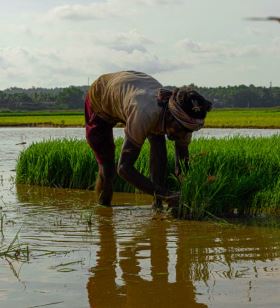
Pic Credit: Pexel
India’s agritech revolution is entering a new phase as artificial intelligence, satellite-based crop monitoring and digital agricultural infrastructure reshape farming. The challenge now is to convert technological progress into affordable services, lower production costs and more dependable incomes for small farmers.
India’s agricultural technology sector is moving beyond experimental applications towards a more connected farming ecosystem. Artificial intelligence (AI), digital crop records, precision irrigation, pest surveillance and multilingual advisory services are increasingly being used to support agricultural decisions. These developments could improve productivity and strengthen the country’s food supply chain, but their long-term success will depend on whether small and marginal farmers can access and benefit from them.
The scale of the challenge is considerable. Agriculture remains central to rural livelihoods, while fragmented landholdings, unpredictable weather and rising input expenses leave many farmers with limited financial flexibility. For them, adopting new technology is not simply a question of availability. It is a business decision involving costs, risks and the likelihood of earning more from each cropping season.
India’s Digital Agriculture Push Gains Momentum
A major development in India’s agritech transformation is the expansion of digital infrastructure designed to connect agricultural data with public services and private innovation.
The Digital Agriculture Mission, approved in September 2024 with an outlay of ₹2,817 crore, is building the foundations for a more data-driven agricultural ecosystem. Its key components include AgriStack, the Krishi Decision Support System and digital soil information.
The scale of implementation has grown considerably. According to government figures released in February 2026, more than 8.48 crore Farmer IDs had been generated by February 4, 2026. The Digital Crop Survey for the 2025 Kharif season covered more than 28.5 crore plots across 604 districts. These figures illustrate the expanding reach of agricultural digitalisation, although the creation of records alone does not establish how many farmers are actively using advanced technology.
For farmers, the potential benefits include easier identification for eligible agricultural services, improved crop information and better access to relevant schemes. For policymakers and businesses, reliable agricultural data can support crop planning, risk assessment and the development of services tailored to local conditions.
The commercial opportunity lies in translating this infrastructure into practical solutions, including better credit assessment, targeted crop advisories, improved insurance processes and more efficient agricultural supply chains.
Artificial Intelligence Is Bringing Agricultural Advice Closer to Farmers
AI is emerging as an important tool for addressing some of the information gaps that affect Indian agriculture. By analysing weather forecasts, satellite imagery, soil information and crop-health indicators, AI-based systems can help farmers and agricultural agencies identify risks and make more informed decisions.
Government initiatives are beginning to demonstrate how these services can operate at scale. By December 2025, the Kisan e-Mitra AI chatbot had answered more than 93 lakh queries and was supporting farmers in 11 regional languages, according to a government update published in February 2026. The service is designed to help farmers obtain information about government agricultural support, with its capabilities developing over time.
Another application is the National Pest Surveillance System, which uses AI and machine learning to support the detection of crop pests and provide timely advisories. Government figures published in February 2026 indicated that the system supported surveillance across 66 crops and more than 432 pest types.
These developments highlight the growing role of digital tools in agricultural decision-making. Earlier identification of pest threats can help farmers respond before infestations cause more extensive damage, while accessible advisory services can reduce dependence on information that may otherwise be difficult to obtain.
However, technology must complement, rather than replace, reliable agricultural extension services. Farmers still need advice that reflects their specific crops, local weather, soil conditions and available resources.
Bharat-VISTAAR Signals the Next Stage of Smart Farming
The Union Budget 2026–27 proposed Bharat-VISTAAR, a multilingual AI-enabled platform intended to integrate agricultural information, including the AgriStack ecosystem and agricultural research recommendations, to improve farmers’ access to relevant guidance.
The initiative reflects a broader shift towards bringing agricultural information together rather than requiring farmers to navigate multiple disconnected services. If implemented effectively, integrated advisory systems could help farmers access information about crop practices, weather-related risks and agricultural decisions through more accessible digital channels.
For agritech businesses, this approach could also create opportunities to develop services that build on shared digital infrastructure. These may include localised farm management tools, crop monitoring, digital market connections and specialised advisory services.
Nevertheless, the quality of the information and the ease of accessing it will determine its practical value. Digital services need to work across different languages, levels of digital literacy and connectivity conditions. They must also provide clear guidance that farmers can use without requiring expensive equipment or complicated technical knowledge.
Precision Farming Can Help Control Input Costs
Precision agriculture is becoming increasingly relevant as farmers face pressure to use water, fertilisers and pesticides more efficiently. Technologies such as soil testing, satellite monitoring, Internet of Things sensors, drone services and automated irrigation can support more targeted farm operations.
For example, soil analysis can help determine nutrient requirements, while weather-based irrigation advice can reduce unnecessary watering. Crop monitoring tools may also help identify areas affected by pests or moisture stress, allowing farmers to take action where it is needed.
The economic benefit is particularly important for smallholders. When input expenses account for a substantial share of production costs, even modest improvements in efficiency can influence the profitability of a crop.
Government support for micro-irrigation provides one route towards wider adoption. Under the Per Drop More Crop programme, eligible small and marginal farmers can receive financial assistance of 55% for drip and sprinkler irrigation systems, subject to scheme conditions. These technologies can improve water-use efficiency and support more controlled application of inputs.
However, returns depend on crop choice, local conditions, installation costs and maintenance. Farmers need transparent information about the likely savings and the time required to recover their investment, rather than general promises of higher yields.
The Affordability Gap Remains Agritech’s Biggest Challenge
Despite the progress, advanced agricultural technology is not equally accessible to all farmers. Purchasing drones, sensors, specialised machinery or automated irrigation equipment can require considerable upfront expenditure. For farmers cultivating small plots, recovering these costs within a few cropping seasons may be difficult.
Fragmented landholdings create another barrier. Equipment designed for large farms may not be economical on smaller plots, while scattered fields can increase the time and expense involved in providing technology-based services.
Digital access presents a separate challenge. A smartphone application may offer useful information, but farmers need reliable connectivity, local-language support and practical guidance to turn that information into action. Access to repairs, trained operators and dependable after-sales services also influences whether technology remains useful beyond an initial trial.
These constraints have important implications for the agritech business model. Selling expensive equipment directly to every farmer may not be the most effective route to adoption. Shared services, affordable subscriptions and pay-per-use arrangements can make technology accessible without requiring individual ownership.
The industry’s next phase will therefore depend as much on business-model innovation as on technical advancement.
Shared Machinery and Rural Entrepreneurs Can Expand Access
Custom Hiring Centres and Farmer Producer Organisations offer practical ways to bridge the affordability gap. Instead of purchasing equipment individually, farmers can rent machinery when required or access services through collective arrangements.
Drone spraying, soil testing, precision seeding and specialised farm operations can be offered on a service basis. This reduces the initial financial burden on farmers while creating opportunities for rural entrepreneurs to earn income by operating equipment, maintaining machinery and coordinating agricultural services.
Farmer Producer Organisations can also aggregate demand for inputs, negotiate with buyers and improve access to markets. Collective purchasing and marketing can strengthen bargaining power and make it easier for technology providers to serve several farmers within the same area.
Women-led rural enterprises are another potential source of growth. Agricultural drone services and machinery-based businesses can create new income opportunities when supported by appropriate training, finance and local demand.
For agritech companies, these models can improve equipment utilisation and reduce the challenge of acquiring individual customers across widely dispersed rural locations. For farmers, the key advantage is access to useful services without taking on the full cost of ownership.
AI-Based Weather Forecasting Could Strengthen Climate Resilience
Climate uncertainty is increasing the importance of timely and locally relevant agricultural information. Irregular rainfall, heat stress, floods and droughts can disrupt sowing schedules, affect crop development and increase financial pressure on farming households.
AI-based forecasting and satellite monitoring can help identify potential risks and support better planning. A government-reported pilot that provided local monsoon-onset forecasts to farmers across 13 states reached approximately 3.88 crore farmers during the 2025 Kharif season. Among surveyed farmers, 31% to 52% reported changing sowing or land-preparation decisions in response to the forecasts.
The findings illustrate how timely information can influence actual farming decisions. However, the results of a pilot should not automatically be interpreted as proof of higher yields or incomes across all participating regions.
The next step is to connect forecasts with practical recommendations, including suitable sowing windows, water management and crop protection. Better coordination with agricultural extension workers and local institutions will be essential to ensure farmers understand both the opportunities and limitations of predictive tools.
Technology must also be combined with soil conservation, water management, crop diversification where appropriate and accessible crop insurance. These measures can help reduce exposure to risks that digital forecasting alone cannot eliminate.
Agritech Is Creating a Wider Rural Business Ecosystem
The growth of agricultural technology extends beyond farm production. Digital marketplaces, logistics services, storage infrastructure, food processing and agricultural finance are becoming increasingly important to the economics of farming.
Poor storage and fragmented distribution can reduce the value of produce even when farm productivity improves. Better grading, packaging, cold-chain facilities and transport can help preserve quality and connect farmers with more buyers.
Digital marketplaces can improve price discovery, but their effectiveness depends on genuine buyer participation, transparent transactions and efficient logistics. An online listing offers limited value if farmers cannot arrange transportation, meet quality requirements or receive timely payment.
Financial services are another important part of the ecosystem. Better agricultural records and crop information may help eligible farmers access suitable credit and insurance products. However, digital assessment systems must be transparent, and farmers need accessible ways to correct inaccurate records or challenge decisions.
These connections create opportunities for businesses that combine technology with dependable physical services. The strongest models are likely to be those that address a clearly defined agricultural problem and demonstrate measurable economic benefits.
What Will Determine the Future of India’s Agritech Revolution?
India has made significant progress in establishing digital agricultural infrastructure and expanding AI-enabled services. Yet the long-term impact of these investments will depend on whether farmers can translate information and innovation into better financial outcomes.
For policymakers, priorities include improving rural connectivity, strengthening agricultural extension services and ensuring that digital systems work for smallholders and tenant farmers. For agritech businesses, the focus must remain on affordability, local relevance and reliable support. For farmers, technology must offer a clear practical advantage over existing methods.
The sector should also be assessed through meaningful measures of success: lower input costs, improved water efficiency, reduced post-harvest losses, more dependable market access and stronger net farm incomes. The number of digital records created or applications introduced is important, but it is not a substitute for evidence of improved livelihoods.
India’s agritech opportunity is therefore larger than the adoption of advanced machinery or artificial intelligence. It is about building a connected agricultural economy in which information, finance, equipment, infrastructure and markets work together.
India’s agritech revolution will be truly transformative when its benefits reach the smallest farms. The defining measure of success will be whether technology helps farmers manage risk, control costs and earn more reliably from their land.